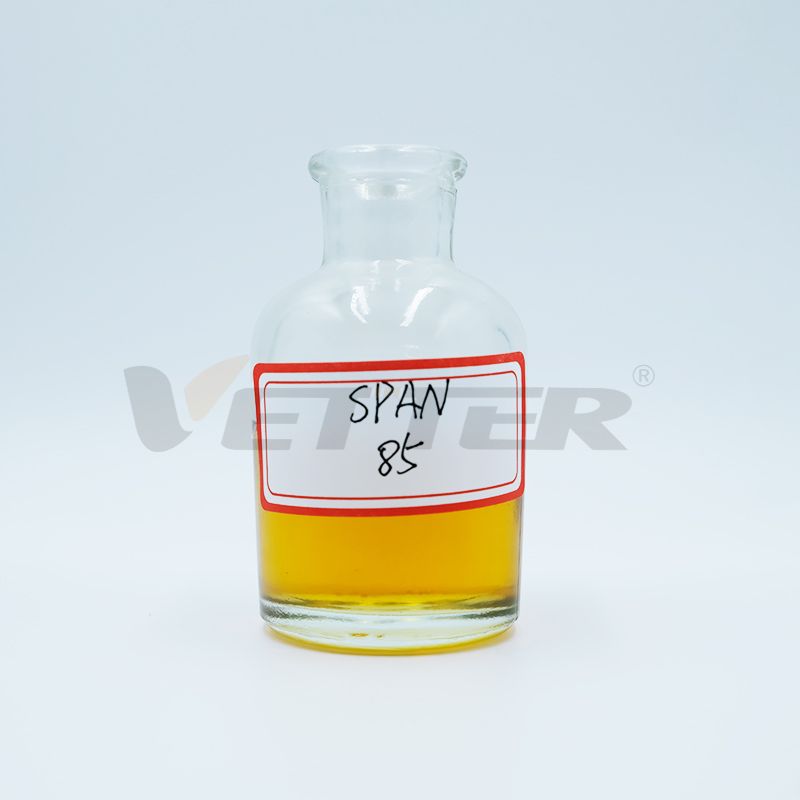
To solve emulsion instability, inconsistent viscosity, and batch-to-batch performance problems, we can use a controlled five-step method: define the required emulsion profile, screen Tween 60 Emulsifier compatibility, control raw-material quality, validate stability through laboratory testing, and release only batches that meet documented acceptance criteria. This practical approach helps industrial manufacturers improve process consistency while keeping explosive-material handling within applicable legal, safety, and transport requirements.
Safety note: Industrial explosives must be developed, manufactured, transported, and used only by licensed organizations and qualified personnel. This article discusses formulation-control principles and quality assurance, not explosive recipes, initiation systems, field loading instructions, or production parameters.
!
Industrial emulsion explosives depend on a stable dispersion of separate phases. In simplified terms, the system commonly includes an oxidizer phase, a continuous fuel phase, emulsifying agents, and carefully controlled additives. The emulsifier helps reduce interfacial tension and supports the formation of a consistent droplet structure.
When the emulsion is not balanced, manufacturers may experience:
This is where Tween 60 Emulsifier, also known as polysorbate 60, may support a broader emulsifier package. Tween 60 is a nonionic surfactant with a relatively hydrophilic character. Its compatibility, however, depends on the complete system, including the primary emulsifier, oil phase, aqueous phase, temperature, shear history, and storage conditions.
For that reason, VETTER recommends treating Tween 60 as a performance component requiring qualification—not as a universal replacement for a primary emulsifier.
A balanced emulsion requires a sufficiently strong interfacial film around dispersed droplets. Tween 60 Emulsifier can participate in interfacial adsorption and may help improve the continuity of the surfactant layer when used with a compatible emulsifier package.
The practical objective is not simply to maximize surfactant content. Instead, we evaluate whether the system delivers:
Because Tween 60 has a different hydrophilic-lipophilic balance from many oil-soluble emulsifiers, compatibility testing is essential before commercial adoption.
Manufacturers often need an emulsion that can pass through metering, pumping, filling, or packaging equipment without excessive pressure variation. A suitable Tween 60 emulsifier system may help maintain a more predictable rheological profile when process variables are tightly controlled.
We recommend monitoring:
For laboratory measurement, ASTM D2196 can be considered for rotational viscosity testing where applicable. The selected method should match the actual emulsion type and be documented in the product specification.
Storage stability is a commercial issue as much as a technical issue. A product that separates before delivery can create customer complaints, rejected shipments, and significant disposal costs.
A qualified Tween 60 Emulsifier package may contribute to improved stability by supporting droplet protection and reducing the rate of phase separation. Nevertheless, stability should be demonstrated through a controlled study rather than assumed from supplier literature.
A useful stability program may include:
Testing temperatures, durations, and pass/fail criteria should be established by the manufacturer’s authorized technical team and safety department.
Before selecting an emulsifier, we establish the operating profile. The specification should identify the required behavior rather than only naming a raw material.
Record:
This prevents a common purchasing mistake: selecting a low-cost additive without confirming whether it fits the total emulsion architecture.
The performance of Tween 60 Emulsifier depends strongly on raw-material consistency. We recommend requesting a certificate of analysis for every lot and defining incoming inspection requirements.
Typical quality checks may include:
Acceptance limits must be based on the agreed technical data sheet and validated application requirements. A supplier should be able to provide lot traceability, technical documentation, and a documented corrective-action process.
VETTER buyers can also request a retained sample from each lot. Retention samples support root-cause analysis if viscosity, stability, or processing behavior changes later.
At this stage, we assess the interaction between Tween 60, the primary emulsifier, the oil phase, the aqueous phase, and other approved additives.
The screening should focus on comparative behavior, including:
Where droplet size is measured microscopically, laboratories may set an internal measurement precision target such as 0.01 mm, provided the instrument and method can genuinely support that resolution. The important point is method repeatability: the same sample should produce comparable results across analysts and test dates.
This work must be performed in a properly authorized laboratory under the site’s explosives-safety management system. It should not be carried out as an informal workshop experiment.
Laboratory compatibility does not automatically guarantee production performance. Scale-up can change shear energy, residence time, heat transfer, and order of addition.
During validation, we document:
We should not change multiple variables at the same time. A controlled design-of-experiments approach can help identify whether instability is caused by the emulsifier package, temperature, water content, shear history, or another process factor.
A robust release system combines laboratory results, production records, and safety approval. Many manufacturers use 100% inspection for packaging integrity, labeling, lot identity, and visible abnormalities, while applying statistically justified sampling plans to laboratory tests.
A release checklist may include:
A supplier response target of 24 hours can be included in a technical service agreement for urgent quality questions, but the actual response commitment should be confirmed contractually with VETTER.
Possible causes include an unsuitable emulsifier balance, excessive water, temperature cycling, or insufficient interfacial-film strength.
Recommended actions:
High viscosity can reduce pump efficiency and increase filling variation. It may result from temperature changes, over-processing, raw-material variability, or an incorrect emulsifier package.
We should first verify measurement conditions. A viscosity result without a defined spindle, speed, temperature, and sample history is difficult to interpret. ASTM D2196 or another validated method should be applied consistently.
Foam can interfere with density measurement, packaging, and visual inspection. Possible causes include excessive shear, surfactant incompatibility, or unsuitable addition order.
The solution is to review equipment design and process controls with qualified engineers. Operators should never improvise defoamer selection in an explosive-material process without formal compatibility, safety, and regulatory approval.
Variation often originates upstream. Even when the formula is unchanged, differences in oil quality, water content, surfactant purity, temperature, or mixing history can alter emulsion behavior.
A practical control plan includes:
To make qualification more efficient, we can combine technical testing with disciplined documentation.
Useful resources include:
For emulsions used in regulated industrial applications, applicable standards may include relevant ASTM methods, DIN procedures, EN 13631 requirements where applicable, and the UN Recommendations on the Transport of Dangerous Goods. The exact standard depends on product classification, jurisdiction, and intended use.
Before purchasing Tween 60 for an industrial emulsion system, we should ask the supplier:
These questions reduce procurement risk and help engineering teams compare suppliers on more than price alone.
To apply How Tween 60 Supports Balanced Emulsion Systems for Industrial Explosives in a responsible way, we should:
Tween 60 Emulsifier can support balanced emulsion behavior when it is selected as part of a validated surfactant system and managed through disciplined quality control. With VETTER documentation, controlled testing, and a clear supplier-response process, manufacturers can reduce separation, improve production consistency, and strengthen supply reliability without compromising regulatory and explosives-safety obligations.
A: When selecting Tween 60 Emulsifier, consider the intended industrial application, storage and transport temperature ranges, required shelf-life, pumping and filling conditions, water-exposure risk, target viscosity range, and relevant safety regulations.
A: Request a certificate of analysis for each lot, verify raw-material consistency through typical quality checks, and ensure that acceptance limits are based on the agreed technical data sheet.
A: No, Tween 60 should be treated as a performance component requiring qualification rather than a universal replacement, as its compatibility depends on the complete emulsion system.
A: Conduct compatibility screening focusing on initial emulsion formation, visual uniformity, droplet-size distribution, viscosity drift, and thermal response. Use validated methods like ASTM D2196 for consistent results.
A: Challenges like phase separation or excessive viscosity can arise. Regularly compare retained samples, monitor raw material certificates, and maintain calibrated instruments to ensure consistent quality and performance.