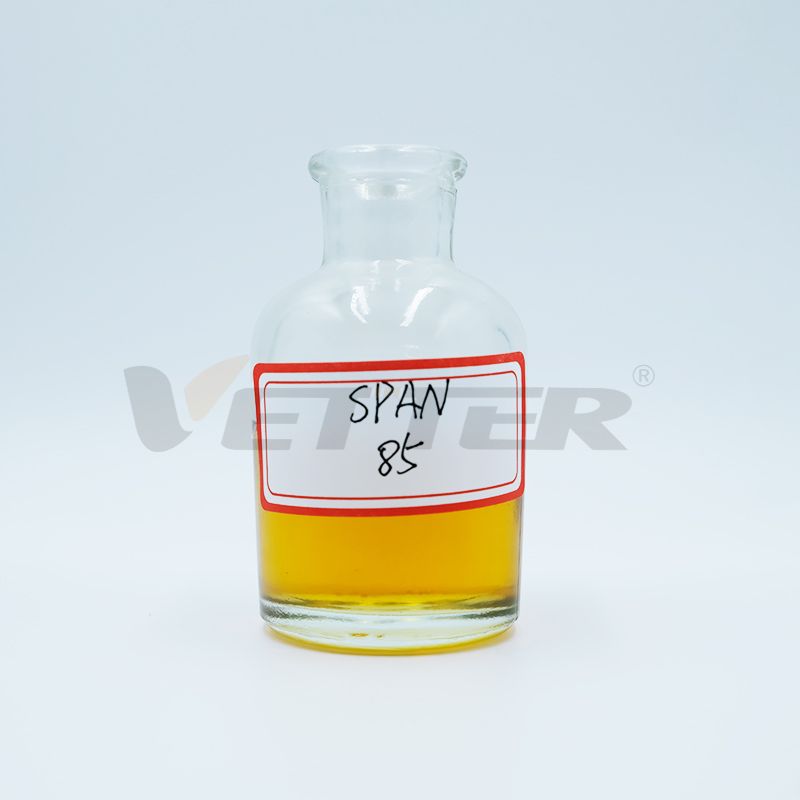
Tween 20 Emulsifier is becoming an important tool for stable, water-based specialty formulations. Many product developers need a surfactant that can disperse oils, protect active ingredients, and work at low use levels.
Its nonionic surfactant structure supports good compatibility with many cosmetic, food, laboratory, and pharmaceutical ingredients.
Formulators also use Tween 20 for oil-in-water emulsion stability, fragrance dispersion, and active ingredient solubilization.
The ingredient is also known as polysorbate 20 and has a high hydrophilic-lipophilic balance, commonly reported at about 16.7.
However, buyers still face problems with batch variation, oxidation, microbial control, and long-term storage performance.
These issues create opportunities for better quality control, cleaner production, and application-specific Tween 20 grades.
The strongest future opportunities for Tween 20 are in pharmaceutical excipients, cosmetic emulsion systems, oral care products, food and beverage formulations, biotechnology media, and specialty laboratory reagents. Growth will depend on high-purity grades, low-peroxide materials, improved traceability, and reliable performance in low-dose formulations. Suppliers that provide batch data, application guidance, and controlled packaging can gain an advantage in these markets.
Tween 20 is a nonionic surfactant made by ethoxylating sorbitan laurate. Its chemical name is polysorbate 20. Its CAS Registry Number is 9005-64-5.
Unlike ionic surfactants, Tween 20 does not carry a permanent electrical charge. This feature can reduce compatibility problems with salts, proteins, polymers, and many active ingredients.
Typical technical data for commercial Tween 20 include:
| Parameter | Common reported range or value | Why it matters |
|---|---|---|
| INCI or common name | Polysorbate 20 | Used for cosmetic and formulation identification |
| CAS number | 9005-64-5 | Supports material traceability |
| HLB value | About 16.7 | Indicates strong water affinity and suitability for oil-in-water systems |
| Physical form | Yellow to amber liquid or semisolid liquid | Affects pumping, mixing, and filling conditions |
| Water dispersibility | Readily dispersible in water | Supports clear or translucent aqueous products |
| Charge type | Nonionic | Improves tolerance with many salts and active ingredients |
Actual values depend on the raw material source, production process, storage conditions, and test method. Buyers should use the supplier certificate of analysis for release decisions.
Many laboratory trials begin with Tween 20 concentrations between 0.05 percent and 2.0 percent. The correct level depends on oil content, active ingredient concentration, mixing energy, and the required appearance.
A low-dose polysorbate 20 formulation can reduce the amount of auxiliary ingredients. This may simplify the formula and reduce the final product load.
Development rule:
Start with a screening range of 0.1 percent, 0.25 percent, 0.5 percent, 1.0 percent, and 2.0 percent. Then select the lowest level that passes stability and performance tests.
Tween 20 can help reduce surface adsorption and improve the handling of proteins, peptides, and other sensitive materials. It is also used in some cell culture workflows, diagnostic reagents, and laboratory buffers.
In protein formulations, the surfactant may reduce contact between the active material and container surfaces. The final concentration must be selected through compatibility, potency, and stability studies.
Cosmetic formulators use Tween 20 for fragrance solubilization, facial mist systems, cleansing products, micellar products, and water-based sprays.
Its high HLB value makes it useful when a small oil phase must be dispersed in a larger water phase. Clear appearance is possible in some formulas, but clarity depends on the oil type and total surfactant ratio.
Food-grade polysorbate 20 may be considered for selected applications where regulations permit its use. Product developers must review local food additive rules, maximum use levels, labeling requirements, and purity specifications.
Potential uses include flavor dispersion, beverage emulsions, and bakery or confectionery systems. Regulatory approval must be confirmed before commercial production.
Tween 20 can help disperse flavor oils and support uniform distribution in mouthwash, toothpaste, surface cleaners, and liquid detergents.
Compatibility testing is important because salts, preservatives, fragrances, and polymers can change viscosity or appearance.
Laboratories use nonionic surfactants to improve wetting and remove residues from glassware, instruments, and sample surfaces. Low-foam or controlled-foam grades can support automated equipment.
One common search intent is to compare Tween 20 with related surfactants. The best choice depends on the oil phase, target HLB, pH, temperature, foam level, and regulatory requirements.
| Emulsifier | Typical character | Common formulation role | Key selection point |
|---|---|---|---|
| Tween 20 | Nonionic, high HLB, water-loving | Oil-in-water emulsions and fragrance solubilization | Useful for aqueous systems and sensitive ingredients |
| Tween 80 | Nonionic, high HLB, larger oleate group | Oil dispersion and biological formulations | Often selected when a more lipophilic fatty acid group is useful |
| Span 20 | Nonionic, low HLB, oil-loving | Water-in-oil emulsions and co-emulsifier systems | Often blended with high-HLB surfactants |
| Lecithin | Phospholipid-based emulsifier | Food, nutrition, and cosmetic systems | Natural source and phospholipid profile may be important |
| Sodium lauryl sulfate | Anionic surfactant | Detergent, wetting, and foaming applications | Stronger charge effects and higher irritation risk in some uses |
Tween 20 is not automatically the best emulsifier. A controlled comparison should measure droplet size, viscosity, phase separation, foam, odor, color, and active ingredient recovery.
A reliable Tween 20 supplier should provide a certificate of analysis for each batch. Common release tests include appearance, identification, acid value, saponification value, hydroxyl value, moisture, ash, and viscosity.
Depending on the application, buyers may also request tests for:
Pharmaceutical projects may require compliance with a recognized pharmacopeia, such as USP-NF or the European Pharmacopoeia. Cosmetic and industrial projects may use an agreed internal specification.
Testing laboratories should use validated or verified methods. An ISO/IEC 17025 accredited laboratory can provide additional confidence in analytical competence.
Production sites serving regulated markets should use documented batch records, change control, deviation management, cleaning validation, and traceability systems. GMP controls may be required for pharmaceutical or high-purity applications.
| Quality area | Suggested control | Typical implementation target |
|---|---|---|
| Incoming raw materials | Identity and supplier approval | 100 percent lot identification before use |
| Batch release | Certificate of analysis review | Every production batch |
| Microbial quality | Microbial limit testing | Frequency based on application risk |
| Packaging inspection | Container, seal, label, and lot code check | 100 percent visual inspection for shipment units |
| Stability monitoring | Heat, light, and freeze-thaw studies | At least three planned conditions during development |
Polysorbate materials can form degradation products during storage. Oxidation may affect odor, color, peroxide value, and compatibility with sensitive active ingredients.
Storage should normally follow the supplier specification. A cool, dry location away from direct light is commonly recommended. Containers should remain closed when not in use.
Manufacturers can improve control through the following measures:
Packaging can influence shelf life and handling quality. Suitable options may include lined drums, plastic containers, intermediate bulk containers, or other approved packaging systems.
VETTER can be included in a documented packaging and inspection workflow when the supply chain requires controlled filling, container verification, and batch traceability. The final packaging choice should be based on chemical compatibility, transport conditions, container size, and customer requirements.
A step-by-step process helps reduce failed trials and improves scale-up accuracy.
Raw material review
Downward flow to small-scale screening
Small-scale screening at five concentration levels
Downward flow to compatibility testing
Compatibility testing with active ingredients, oils, salts, and preservatives
Downward flow to stability testing
Stability testing at controlled temperature and light conditions
Downward flow to pilot production
Pilot production and process parameter confirmation
Downward flow to quality release
Final specification, packaging approval, and commercial release
| Development stage | Useful measurement | Example decision point |
|---|---|---|
| Screening | Appearance, pH, viscosity, and separation | Select formulas with no visible separation after initial storage |
| Emulsion testing | Droplet size and size distribution | Compare the selected formula against the internal target |
| Stress testing | Freeze-thaw and centrifuge response | Reject formulas with irreversible phase separation |
| Stability testing | Color, odor, peroxide value, and active recovery | Confirm acceptable change over the planned shelf-life period |
| Scale-up | Mixing time, temperature, shear rate, and fill weight | Confirm that pilot results match laboratory results |
Development teams can improve efficiency by testing three independent laboratory batches before pilot production. A practical program may include 15 to 30 screening samples, followed by three pilot batches and a stability study with at least three storage conditions.
Several long-tail search topics show clear commercial intent:
These applications require more than a low price. Buyers often need documentation, reliable delivery, technical support, and consistent physical properties.
A supplier can strengthen its offer by providing a technical data sheet, safety data sheet, certificate of analysis, allergen statement when relevant, country of origin, packaging details, and change notification policy.
Application data is also valuable. A supplier may compare five concentration levels, record viscosity at a defined temperature, measure separation after centrifugation, and report particle size after a fixed mixing cycle.
Permitted uses and maximum levels differ by country and product category. A grade approved for cosmetics may not meet pharmaceutical or food requirements.
Polysorbate products contain complex mixtures of related components. Differences in raw materials and processing can affect color, odor, viscosity, and oxidative behavior.
Heat, light, oxygen, and trace metals can increase degradation risk. Sensitive formulations need a defined stability program.
Specialty markets often require continuous supply. A second approved source, safety stock, and documented change control can reduce interruption risk.
Customers may not know the correct concentration, mixing order, or test method. Technical support can be as important as the raw material itself.
Buyers should assess the supplier using a documented checklist:
| Supplier evaluation item | Questions to ask |
|---|---|
| Specification | Does the product meet the required pharmacopeia or internal standard? |
| Testing | Which methods are used for identity, moisture, viscosity, acid value, and peroxide value? |
| Traceability | Can every shipment be linked to a production batch and raw material record? |
| Packaging | Are the container material, seal, and label suitable for the product? |
| Stability | Are storage conditions and retest or expiry dates clearly defined? |
| Technical service | Can the supplier support concentration screening and scale-up trials? |
| Supply continuity | Are production capacity, lead time, and backup plans documented? |
A supplier audit should review production hygiene, laboratory equipment calibration, sampling procedures, complaint handling, and shipment records. For high-risk applications, buyers should test an incoming sample before approving the first commercial batch.
The future of the Tween 20 emulsifier market will depend on specialty performance rather than commodity volume alone. Pharmaceutical excipients, biotechnology reagents, cosmetic emulsions, food systems, oral care products, and laboratory solutions all offer growth opportunities.
Tween 20 provides a high HLB value, nonionic behavior, water dispersibility, and useful solubilization performance. Its success in advanced formulations will depend on low-peroxide control, microbial quality, stable supply, accurate testing, and strong technical documentation.
Companies that combine consistent polysorbate 20 quality with validated testing, controlled packaging, application data, and responsive technical support will be better positioned to capture future specialty formulation demand.
A: Tween 20 emulsifier is primarily used in pharmaceutical excipients, cosmetic emulsion systems, food and beverage formulations, and laboratory reagents. Its versatility in dispersing oils and solubilizing active ingredients makes it suitable for various applications.
A: When selecting a Tween 20 supplier, ensure they provide a certificate of analysis, maintain strict quality controls, and offer batch traceability. Also, check if they can support your specific application needs with technical guidance.
A: Tween 20 helps maintain oil-in-water emulsion stability and prevents sedimentation. Its nonionic structure reduces compatibility issues with other ingredients, contributing to overall product stability.
A: Yes, request documentation on identity checks, peroxide values, moisture content, and microbial limits. Compliance with recognized pharmacopeias is also crucial for pharmaceutical applications.
A: Low-peroxide Tween 20 enhances product stability by minimizing the risk of oxidation, which can negatively affect the functionality of sensitive active ingredients and overall formulation quality.